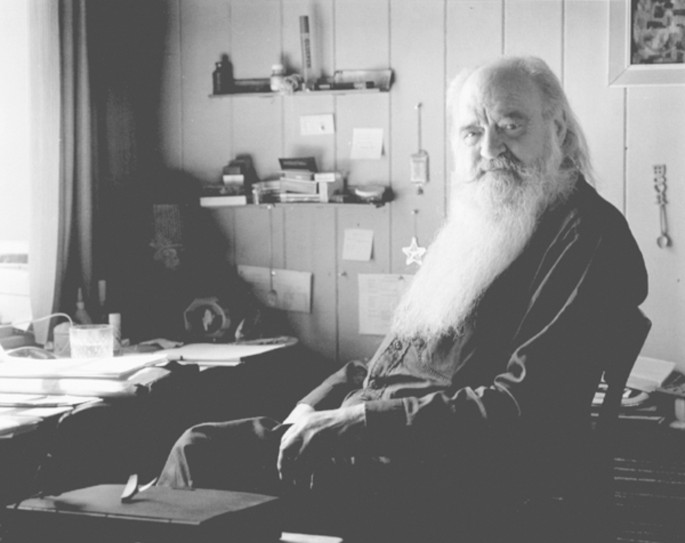
Celebrating 100 years since the birth of Stafford Beer invites admiration. His ideas helped generations of leaders move beyond command-and-control thinking and begin treating organisations as living systems.
But anniversaries are also a moment for honesty.
Because while Beer gave us extraordinary tools for understanding viability, he was less explicit about some of the realities that dominate system leadership today. And if we want his work to remain useful, rather than just revered, we need to talk about what’s missing.
This isn’t a critique from the sidelines; it’s an extension of the conversation Beer wanted us to keep having.
1. Power sits more awkwardly than Beer allowed
Beer was deeply committed to human freedom within systems. But much of his work assumed that once the right structures were in place, better behaviour would follow.
In practice, power doesn’t dissolve that neatly.
In public and place-based systems, power is political, historical, unevenly distributed and often invisible to those who hold it
Two systems can look identical on paper and behave very differently depending on whose voice carries weight, whose risk is tolerated, and whose experience is discounted.
Beer gave us a language for control and autonomy, but less for contested legitimacy, structural inequality, and the reality that some actors are heard long before any feedback loop kicks in.
For today’s system leaders, viability without justice isn’t neutral, it’s fragile.
2. Lived experience isn’t just “environmental feedback”
In Beer’s models, communities often appear as part of the environment the system must sense and respond to.
That framing matters.
Because when lived experience is treated as data, rather than as agency, systems become responsive without becoming relational. They listen, but only on their own terms.
In the work we do, especially in physical activity and health systems, the difference is stark: engagement asks, “What do people think?”, while power-sharing asks, “Who decides what happens next?”
Beer didn’t ignore people. But his work didn’t fully grapple with the moral and political implications of who gets to shape the system itself.
That’s a gap modern system leadership can’t afford to skip over.
3. Structure can become the new comfort blanket
The Viable System Model is elegant. That’s part of its danger.
We’ve seen systems replace old hierarchies with new diagrams – we tend to believe they’ve embraced complexity because the language has changed. In reality, the same behaviours persist under a more sophisticated vocabulary.
Beer warned against over-centralisation, but his work can still be misused as a design exercise:
- Mapping functions instead of changing relationships
- Debating structure instead of redistributing authority
- Diagnosing endlessly instead of acting experimentally
In complex systems, progress rarely comes from “getting the model right.” It comes from making different choices, in real time, with real consequences.
Structure should support practice – not substitute for it.
4. Beer underestimated how hard unlearning would be
Beer believed that once leaders understood how systems actually behave, they would change how they led.
That’s only half true.
Understanding complexity doesn’t automatically dismantle:
- Performance anxiety
- Fear of accountability
- Political exposure
- Professional identity tied to control
Modern system leadership isn’t just about insight – it’s about letting go. And letting go is emotional work, not technical work.
This is where coaching, reflection, and peer learning matter just as much as theory. Beer gave us clarity. He gave us less on how leaders survive the discomfort that clarity brings.
So why keep Beer in the conversation at all?
Because even his blind spots are useful.
Beer forces us to ask better questions:
- What would viability mean if we centred equity, not efficiency?
- How do feedback loops change when communities hold real authority?
- Where are we mistaking coherence for control?
- What are we protecting when we say a system “can’t cope” with change?
At Miova, we don’t see Beer as a blueprint to follow. We see him as a provocation – a starting point that needs updating, humanising, and grounding in lived reality.
From viability to vitality
If Beer taught us how systems survive, today’s challenge is different.
We’re being asked to help systems become more human, more just, more locally intelligent, more capable of learning in public.
That shift – from viability to vitality – requires more than models. It requires courage, trust, and a willingness to redistribute power in ways that diagrams alone can’t capture.
A hundred years on, Stafford Beer still matters.
But only if we’re willing to take his ideas seriously enough to move beyond them.
And that, we suspect, is exactly what he would have wanted.
The ideas in this article are informed by (and intentionally in dialogue with) the following works and thinkers:
- Stafford Beer
- Brain of the Firm (1972)
- Designing Freedom (1974)
- The Heart of Enterprise (1979)
- Diagnosing the System for Organisations (1985)
- Donella Meadows
- Thinking in Systems: A Primer (2008) — particularly on paradigms, leverage points, and system intent
- Margaret Wheatley
- Leadership and the New Science (1992) — for the relational and human dimensions of systems
- Dave Snowden
- Work on complexity, sense-making, and decision-making under uncertainty (Cynefin)
- Practice-informed perspectives from:
- Place-based systems leadership
- Equity-focused systems change
- Community-led and participatory governance literature
These references are not presented as a canon to follow, but as lenses that continue to shape how modern system leaders wrestle with power, participation, and practice.