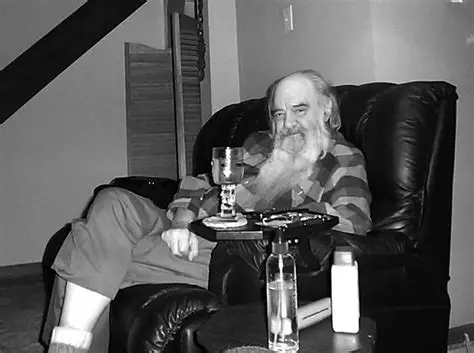
One of the reasons Stafford Beer still matters is not because his models are still widely used in their original form, but because the questions they ask keep resurfacing in new language.
Across systems leadership today, we rely on a familiar set of frameworks: the Socio-Ecological Model, the Iceberg Model, the Two Loops Model, increasingly, the Stacey Matrix and distinctions between complicated and complex
They look different. They come from different traditions. But they are often grappling with the same underlying challenge that Beer spent his life exploring: How do we create change in complex systems without breaking the very conditions that allow them to function?
Beer’s Viable System Model: a structural lens on complexity
Beer’s Viable System Model (VSM) is fundamentally about conditions for survival.
It asks:
- How is work distributed?
- How is coordination achieved without suffocating autonomy?
- How does the system learn about its environment?
- Who holds purpose and identity?
Unlike many modern frameworks, VSM is unapologetically structural. It insists that: every system needs operational autonomy and system-wide coherence; intelligence must sit close to action; feedback must travel quickly and meaningfully; control should enable adaptation, not suppress it.
In today’s language, Beer was concerned with governance, decision rights, information flow, and system-level learning – even if he didn’t use those terms explicitly.
What Beer understood, long before “complexity” became mainstream, is that over-controlling a system reduces its ability to respond to reality. Viability depends on freedom within constraint.
Complicated vs complex: why this distinction matters
One of the most common mistakes in systems leadership is treating complex problems as if they were merely complicated.
Complicated problems can be broken down, benefit from expert analysis, respond well to planning and have targets and best practice.
Complex problems can’t be fully predicted, involve multiple interacting actors, change as you intervene and require learning, adaptation, and experimentation.
Beer didn’t use this language explicitly, but the distinction is implicit throughout his work. His insistence on feedback loops, decentralised intelligence, and autonomy only makes sense in complex conditions.
Trying to “manage” complexity with complicated tools is precisely the failure mode Beer spent his career critiquing.
The Stacey Matrix: a situational lens
This is where the Ralph Stacey Matrix earns its place.
The Stacey Matrix helps leaders recognise what kind of situation they are actually in by looking at levels of certainty and levels of agreement. It distinguishes between simple situations (clear cause and effect), complicated situations (knowable with expertise), complex situations (emergent and uncertain) and chaotic situations (needing immediate stabilisation).
What Stacey adds to Beer is situational humility.
Beer tells us what systems need to remain viable.
Stacey helps us see when prediction is possible and when it isn’t.
Together, they explain why linear plans fail in complex environments, why excessive governance increases fragility and why leaders must shift from control to sense-making
Used well, the Stacey Matrix isn’t a label. It’s a prompt:
What kind of leadership does this situation actually require?
The Socio-Ecological Model: a relational lens
The Socio-Ecological Model is now almost ubiquitous in health, wellbeing, and physical activity systems. It reminds us that behaviour is shaped across multiple interacting levels: individual, interpersonal, organisational, community and policy.
Where Beer focused on viability within systems, the socio-ecological model highlights how influence flows across layers of context.
The overlap is important: Beer asks whether each level has the autonomy and intelligence it needs, the socio-ecological model asks whether interventions recognise that no level acts alone
Problems arise when the socio-ecological model becomes a checklist – layers acknowledged, but decision-making still centralised. Beer would argue that without autonomy at each level, the system cannot adapt, regardless of how well the layers are mapped.
The Iceberg Model: a diagnostic lens
The Iceberg Model encourages leaders to look beneath visible events: events, patterns and trends, system structures, mental models.
This aligns closely with Beer’s most quoted insight:
“The purpose of a system is what it does.”
Where Beer mapped structural functions explicitly, the Iceberg Model helps leaders surface recurring behaviours, hidden incentives and beliefs that silently shape action
In practice, Beer helps redesign the plumbing and the Iceberg Model explains why the water keeps flowing the same way
Without this depth, leaders risk mistaking activity for progress.
The Two Loops Model: a change and transition lens
The Two Loops Model addresses something Beer largely left implicit: endings.
It helps leaders recognise a dominant system in decline, an emerging system taking shape or a transitional space where both coexist
Beer focused on sustaining viability.
Two Loops helps leaders navigate letting go.
The connection is subtle but powerful: Beer warned against preserving coherence at the expense of adaptation and the Two Loops Model legitimises experimentation, ambiguity, and emergence
It explains why resistance to change is often rational – and why protecting the old system too long undermines future viability.
What these models share, and why no model is enough alone
All of these frameworks reject linear cause-and-effect; emphasise feedback and adaptation; challenge simplistic solutions
Where they differ is emphasis:
- Beer → viability, governance, autonomy
- Stacey → situational uncertainty and leadership response
- Socio-ecological → multi-level influence and interaction
- Iceberg → depth, patterns, and mental models
- Two Loops → transition, emergence, and endings
Used together, they offer a richer picture of system behaviour than any single model can provide.
How we use this in practice at Miova
We don’t “apply” models as templates.
We use them as ways of seeing:
- Beer when governance and decision-making feel stuck
- Stacey when leaders are over-planning in uncertainty
- Socio-ecological when interventions feel disconnected
- Iceberg when effort is high but outcomes don’t shift
- Two Loops when change is sensed but not yet named
The art of systems leadership isn’t choosing the right model.
It’s knowing which lens helps this system see itself more clearly, right now.
From models to judgement
Beer once said that management was “the profession of professions.” What he meant was that leading systems requires judgement, not recipes.
The models we use today, however familiar or fashionable, are still doing the same work Beer began:
helping leaders move from control to understanding, from certainty to sense-making, from linear plans to adaptive practice.
The risk isn’t that these models are wrong.
It’s that we treat them as answers rather than as invitations to think more carefully.
And that, perhaps, is the most enduring lesson Stafford Beer leaves us with.